The Best AI Blog Writers in 2026 (Here's The 2 Content Winners)
I tested 7 AI blog writing tools head-to-head with identical inputs. Here's what actually works for SEO content, what's overpriced garbage, and the 2 clear winners.
Every AI blog writer claims to produce "SEO-optimized content that ranks." Most are lying. I spent two weeks testing seven different tools with identical inputs to find out which ones actually deliver. The results surprised me.
I built one of these tools myself (Authority Blogger), so I'll be upfront about that bias. But I also have skin in the game to know what actually works.
I've made over $100,000 from a single blog post. I've delivered SEO content for million dollar companies. When I say something performs well for search, I mean it.
The fundamental problem with most AI writing tools is they scrape the top three Google results and regurgitate that same information. Every article sounds identical. Google's getting wise to this. If your content doesn't bring something NEW to the table, you're wasting your time.
Key Takeaways
How I Tested These Tools
I gave every tool the exact same inputs to keep the comparison fair:
- Brand context: Landing page copy and a recorded ramble about my business
- Subject matter expertise: A transcribed video of me explaining the topic in detail
- A YouTube video to embed: To test multimedia handling
- Specific keyword target: "Change lyrics with AI"
- Article length: Medium to long form
I chose a topic I know deeply. This way I could immediately spot when the AI was making shit up versus saying something accurate. That matters more than most people realize.
Here's what I evaluated for each tool:
| Criteria | Weight | Why It Matters |
|---|---|---|
| Subject Matter Expertise Collection | 30% | Can you easily inject YOUR knowledge? This is THE most important factor. |
| Human Effort Required | 15% | How much cleanup work after generation? Do you need to add links, fix formatting? |
| Research Quality | 15% | Does it cite real sources? Does the research actually make sense? |
| Writing Quality | 15% | Does it read naturally? Is the hook strong? Would you publish it as-is? |
| Technical Features | 15% | Anchor links, table of contents, internal linking, SEO scorecards |
| Price to Value | 10% | What do you actually pay per article? Is it worth it? |
Subject matter expertise collection gets 30% weight because it's everything. In a world where every idiot with a credit card can generate generic AI slop, your unique perspective is the only thing that differentiates you.
Want proof? View the actual outputs from each tool:
The 7 Tools I Tested
I tested Jasper, Claude, Harbor SEO, Frizerly, Scrib.li, Manus, and Authority Blogger. Two of these got disqualified before I could even finish testing.
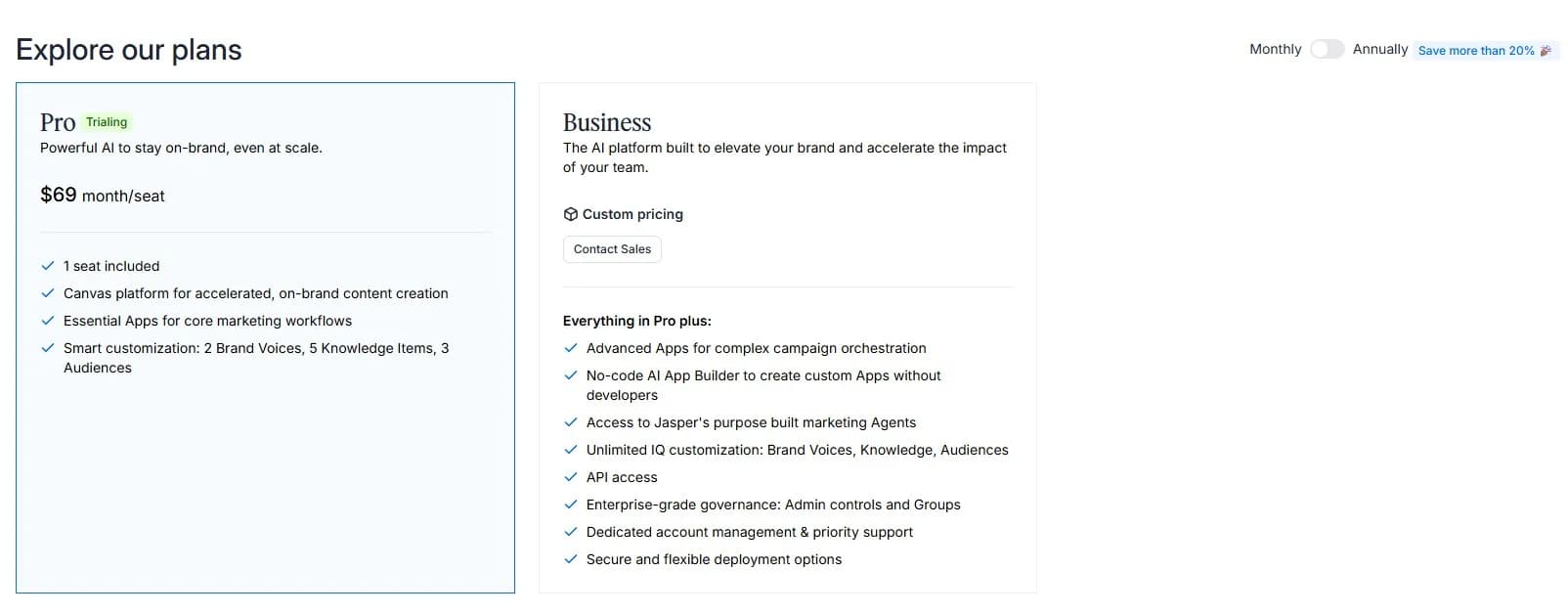
Jasper ($69/month)
Jasper has been around the longest and they're leaning hard into the "AI agents for marketing" angle. Their onboarding was annoying. They make you go through a bunch of setup wizards before you can write anything.
The good: They generated a brand voice from my website URL automatically. You can upload multiple file types to their knowledge base. The UI is polished.
The bad: The actual article output was disappointing. No hyperlinks. No article outline. The image it generated had metadata jumbled into the bottom of it. Obvious AI slop that you couldn't publish without replacement.
And at $69/month (or $700/year if you accidentally leave the annual billing selected), you're paying premium prices for mediocre output.
Verdict: Not worth it for blog-focused content. You'd spend significant time adding links, formatting, and cleaning up after it. Their strength seems to be general marketing copy, not SEO-focused articles. See the actual output →
Claude ($20/month)
Claude is a general-purpose AI assistant, not a dedicated blog writer. But people use it for content all the time, so I included it. I used the Projects feature to store my brand context.
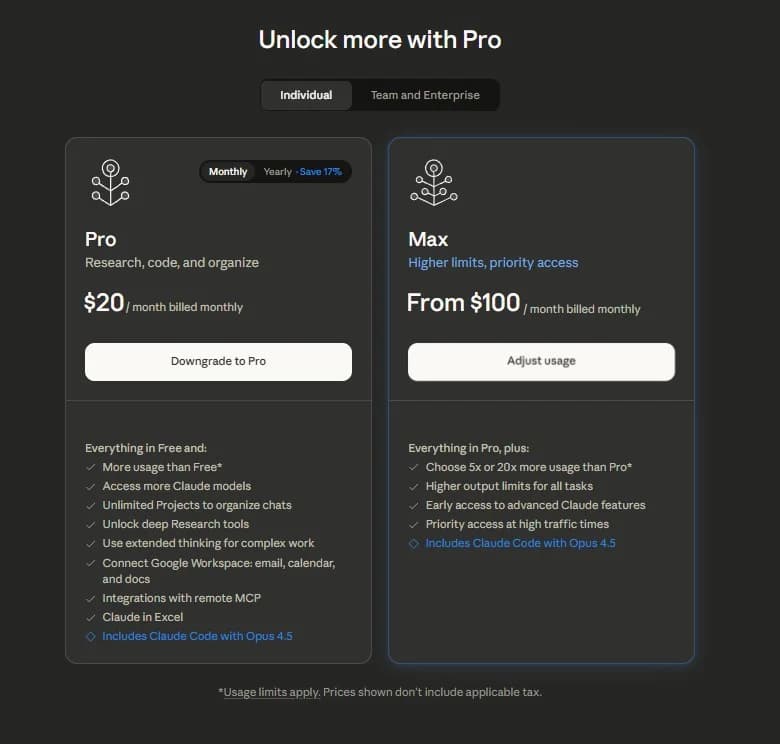
The good: Extended thinking and research capabilities are genuinely useful. The $20/month price point is reasonable if you're already using it for other stuff. Writing quality is decent.
The bad: No native audio upload for transcription. You have to transcribe elsewhere first. No built-in image generation. The images it references are often broken or need to be generated separately.
No internal linking awareness. No SEO guardrails.
Verdict: Fine for drafting if you're willing to do a lot of manual work afterward. But you're basically using a general-purpose tool for a specific job. No matter how much you tweak your prompts, you'll spend considerable effort formatting for publication. See the actual output →
Harbor SEO (€29-99/month)
Harbor SEO actually impressed me in several ways. They have a dedicated article workflow, brand awareness, and some nice features like automatic site analysis.

The good: Key takeaways at the top of articles. Working external links. A decent keyword research tool. "Did you know" callouts from sources. HTML export that actually works. Token-based pricing where unused tokens roll over.
The bad: You cannot preview articles within the tool itself. You have to export the HTML and view it elsewhere. The image handling is weak. It just grabs low-res images from your site and throws them in randomly.
The infographic it generated was clearly AI slop with weird capitalization and artifacts. When a tool generates images that scream "AI made this," it undermines your credibility with readers before they even read a word.
And the killer problem: no specific revision capability. You can regenerate, but you cannot say "fix this specific thing."
Verdict: Solid contender with good SEO awareness. But the lack of targeted revisions means you'd have to use Claude or another tool to fix specific issues anyway. That extra step defeats the purpose. See the actual output →
The Disqualified: Frizerly and Scrib.li
I couldn't complete testing on these two. Here's why.
Frizerly ($29/month): Where do I even start. They offer a 3-day free trial. Sounds reasonable. Except their brand setup takes "up to 24 hours" while someone manually does... something?
So one third of your trial is spent waiting. The whole onboarding flow uses separate apps for filling out forms and redirects you around constantly. It feels incredibly hacked together.

Once I finally got access, things got worse. Their "Write with AI" feature just broke. It would try to redirect and pre-populate the manual editor, which would also break.
When I used the manual editing mode to generate an article, I navigated away for a second assuming it had saved. Nope. Lost everything. Had to regenerate from scratch.
The output itself was disappointing. Stock images everywhere (not original, easily searchable, won't help you stand out). YouTube video embeds were broken. Even when I grabbed the embed code manually and tried to insert it on their publishing subdomain, the video showed as broken.
Speaking of that subdomain: any blogging tool that publishes your content on their public subdomain is a ticking time bomb. Google will eventually figure out they can cross-reference content from these AI publishing farms and penalize everything associated with them. Using Frizerly's hosted publishing is asking for trouble.
But here's the nail in the coffin: you cannot cancel your subscription without emailing their support team. There's no self-service cancellation. This is a massive red flag. Any company that makes it intentionally difficult to leave is telling you something about how they treat customers. Hard pass.
Maybe their research and analytics tools have some value, but there are so many better options. This feels like a poorly built application going for quantity over quality. I would stay far away from Frizerly.
Despite the issues, you can still see Frizerly's output →
Scrib.li ($19/month): This tool auto-generates article ideas and writes them for you with minimal input. Which sounds great until you realize: you cannot modify the brand context.
You cannot edit the article topics. You cannot customize anything. It just picks a title from a list and generates. The output looked like exactly what Google will penalize. Pure AI slop with no differentiation.
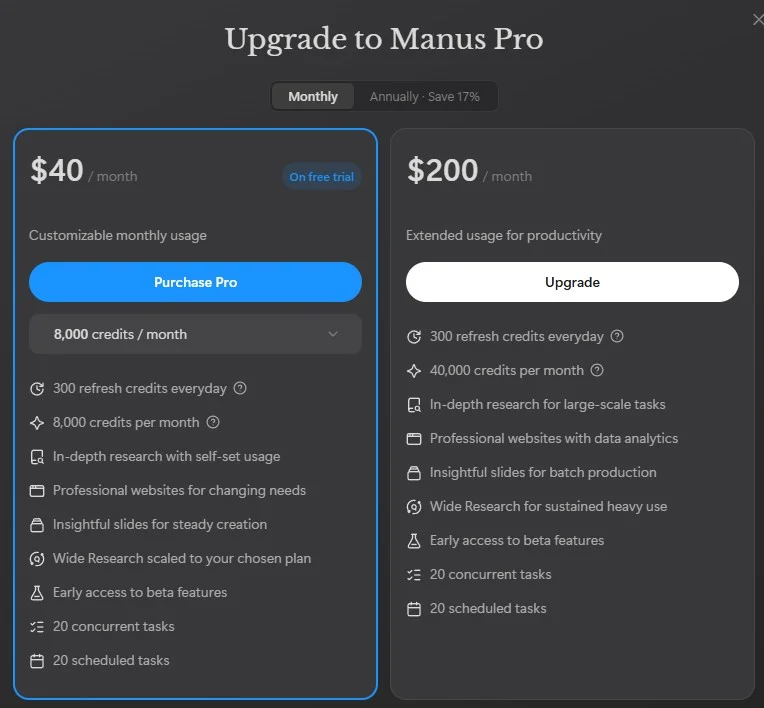
Manus ($40-200/month)
Manus is interesting. It's a multi-agent AI that can code, research, and generate images all in one workflow. I threw my blog requirements at it expecting mediocre results.
The good: It generated a full webpage with beautiful HTML cards, styling, and layout. Used Nano Banana for image generation (impressive). Voice input for brand context.
The iterative feedback loop is powerful because it's a chat-based agent. You can workshop the article through multiple revisions naturally.
The bad: Inconsistent image handling. Sometimes it uses stock photos (searchable, not original), sometimes it generates AI images that look like obvious AI slop. Stock photos signal to readers you didn't make the content yourself. AI-generated images with weird artifacts and garbled text aren't much better.
The output format varies wildly between runs. One time I got a styled webpage. Another time I got a markdown file. No built-in SEO guardrails or scorecards. You have to know what to ask for.
The cost: My test article used 159 credits. On the $40/month plan with 8,000 credits, that's roughly $0.80 per article plus revision costs. Competitive pricing if you're technical enough to prompt it correctly.
Verdict: One of my two winners, and the clear choice over Claude. Why? Manus already has image generation hooked up. Claude requires you to generate images separately and figure out how to include them. With Manus, you get a complete package in one workflow.
And with enough context and detailed prompting, Manus could genuinely produce blog posts ready for publication. The multi-agent architecture handles complex requests that simpler tools cannot. You'll need to bring your own SEO knowledge, but if you're willing to invest in building good prompts, this tool has serious potential. See the actual output →
Authority Blogger ($10/article)
Full disclosure: I built this tool. But I built it because everything else frustrated me. The test I ran was the same as every other tool. Same inputs. Same evaluation criteria.

The good: Record or upload audio directly for subject matter expertise. RSS feed integration for automatic internal linking awareness. Pillar page configuration to prevent keyword cannibalization. Topic strategy with AI-suggested subtopics.
Working anchor links and table of contents. The backend writer validates links before publishing (none of the other tools check for broken links).
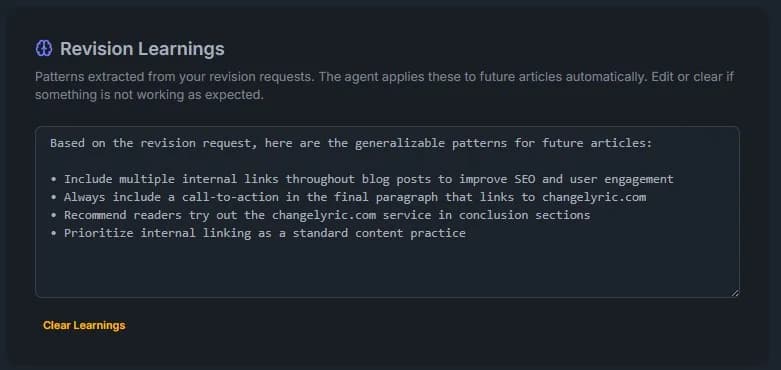
Plus a GEO scorecard that independently verifies best practices like keyword placement, internal linking, and technical SEO. The scorecard isn't AI making judgments. It's deterministic code checking the output. Targeted revision requests that the system learns from over time.
On images: This was the only tool that produced genuinely usable images. Every other tool either generated obvious AI slop (weird artifacts, garbled text, uncanny valley faces) or grabbed generic stock photos that scream "I didn't actually make this content."
Authority Blogger generates original images tailored to each article that don't look like they came from a bulk AI farm. This matters more than people realize. Stock photos and AI slop images signal to both readers and Google that you didn't put real effort into the content.
The bad: Brand setup takes about 5 minutes (faster than Frizerly, but not instant). Article generation takes 10-20 minutes because it's doing research, generating original images, and checking for SEO issues. No one-click WordPress publishing yet (coming March 2026). The AI sometimes ignores specific keyword requests and picks its own title.
The cost: $10 per article. $3 per revision. No monthly fees. New accounts start with free credits to write multiple articles before paying anything.
Verdict: The other winner. Purpose-built for SEO blogging with guardrails that prevent common mistakes. The revision learning system means it gets better at matching your voice over time. If you want something that's ready to copy-paste and publish with minimal cleanup, this is it. The full tutorial walks through every feature if you want details. See the actual output →
Final Comparison
Here's how each tool scored across my evaluation criteria:
| Criteria | Jasper | Claude | Harbor | Manus | Auth Blog |
|---|---|---|---|---|---|
| SME Collection (30%) | 5/5 | 3/5 | 4/5 | 4/5 | 5/5 |
| Human Effort (15%) | 1/5 | 1/5 | 3/5 | 4/5 | 4/5 |
| Research Quality (15%) | 2/5 | 2/5 | 2/5 | 2/5 | 2/5 |
| Writing Quality (15%) | 3/5 | 3/5 | 3/5 | 3/5 | 4/5 |
| Technical Features (15%) | 3/5 | 4/5 | 3/5 | 4/5 | 5/5 |
| Price/Value (10%) | 2/5 | 4/5 | 3/5 | 4/5 | 4/5 |
| Weighted Score | 3.1/5 | 2.8/5 | 3.2/5 | 3.6/5 | 4.2/5 |
Notice that research quality scores low across the board. That's because AI research is fundamentally limited. Every tool I tested made factual errors when writing about my niche topic. The AI confidently stated things that were completely wrong.
This is why subject matter expertise collection matters so much. You cannot rely on AI to know your field.
Authority Blogger has two layers of quality control that other tools lack. First, the backend writer validates that links actually work before the article is finished.
Second, a GEO scorecard independently checks best practices: Is the keyword in the title? Did it include internal links? Is the meta description the right length? The scorecard isn't AI reviewing AI. It's deterministic code that catches issues regardless of what the LLM produced.
What You'll Actually Pay
Monthly subscriptions obscure the real cost. Here's what I spent to generate one article with one revision on each tool:
| Tool | Pricing Model | Cost Per Article | Notes |
|---|---|---|---|
| Jasper | $69/month flat | Varies by volume | Annual trap: $700 if you forget to cancel |
| Claude | $20/month flat | Negligible if used daily | Best value if already using for other tasks |
| Harbor SEO | €29-99/month (tokens) | ~2000 tokens = €1-2 | Cannot do targeted revisions |
| Manus | $40/month (credits) | 159 credits = ~$0.80 | Plus revision costs |
| Authority Blogger | Pay per article | Try without credit card | Free credits included, no monthly commitment |
Authority Blogger's free starting credits let you test before committing. After that, the pay-per-article model makes more financial sense than monthly subscriptions if you're writing occasionally. If you're writing daily, Claude or Manus subscriptions become more economical.
Check Out My Content Creation Tools
I build tools that solve real content creation problems. From AI-assisted blogging to custom song lyrics, many have free trials so you can see the results firsthand.
Explore My Tools →The Two Winners
For traffic-focused bloggers who want ready-to-publish output: Authority Blogger. The pillar page awareness, internal linking, scorecard checks, and revision learning system are specifically designed for people who care about search rankings. You get usable HTML that you can paste directly into your CMS.
For technical users who want flexibility: Manus. It beats Claude because image generation is already integrated. No juggling separate tools. With enough context and careful prompting, you could build a workflow that produces genuinely publish-ready content.
The multi-agent architecture handles complex requests that would require multiple tools otherwise. Just be ready to invest time in crafting detailed prompts and building up your context library.
Harbor SEO deserves honorable mention for its keyword research tools and token rollover pricing. But the output quality, image handling, and lack of revision capability put it a tier below the winners.
The Elephant in the Room
Here's what nobody talks about in these comparisons: AI-generated content without human expertise is becoming trivially easy to detect. Not by AI detection tools. Those are garbage. But by people. And by Google's quality raters.
When I asked these tools to write about my niche topic without providing any subject matter expertise, EVERY single one produced articles with factual errors. Not subtle errors. Confidently wrong statements that anyone knowledgeable would immediately catch.
The tools that scored highest were the ones that made it easiest to inject MY knowledge into the process. Because that's the only way to create content worth reading.
Bottom line: The best AI blog writer is the one that amplifies your expertise instead of replacing it. If a tool makes it hard to add your unique perspective, it's building a content strategy on sand. Google will find you. And when they do, everything you published will tank.
If you want to see how I approach AI-assisted content more broadly, check out my roundup of the best AI tools for 2026. The pattern holds: the tools that work best are the ones that augment human judgment rather than trying to replace it.
My Recommendation
If you're running a business blog and care about rankings, start with Authority Blogger. Every account starts with enough credits to write multiple articles without paying anything. No credit card required.
If you want flexibility and don't mind building your own prompts, try Manus. The $40/month entry point gives you 8,000 credits. That's roughly 50 articles if you're efficient.
What I'd personally use: Authority Blogger + Claude. If I was blogging and cared about making quality content fast, this is the combo. Use Claude for research and prep work before you even start. Then Authority Blogger generates the SEO-optimized draft with proper images and internal links. Then back to Claude for rewrites, tone adjustments, and expanding sections.
Claude is genuinely excellent as a general-purpose writing assistant. Way better than Jasper at a third of the price. It lacks image generation and SEO guardrails on its own, but for research, prep, and polish? Hard to beat. (Worth noting: Manus is basically powered by Claude anyway, so you're getting that same quality with extra tooling.)
Whatever you choose: bring your expertise. Record yourself talking about the topic. Upload transcripts from your videos. Paste in notes from client calls.
The AI is a tool for organizing and presenting YOUR knowledge. The moment you let it drive the narrative unsupervised, you've joined the race to the bottom with everyone else.
Want More Digital Insights?
Subscribe to get more case studies and practical automation techniques delivered to your inbox.
We respect your privacy. Unsubscribe at any time.